Can You Use a Mini Fridge for Camping?
Camping is fricken awesome, and to make it better, why not bring a mini fridge camping? Or even put a mini fridge inside your tent! But is having a mini fridge inside your tent actually a good idea? And how do you power your fridge when camping? I’ll cover all these questions and various power sources.
Yes, you can use a mini fridge for camping. However, most tent sites do not have electric hookups. The best way to power your fridge is to use a camping battery or generator. Your fridge should be kept in the shade and out of the rain as much as possible. Keeping the fridge inside a tent is not recommended due to heat and animals.
Can You Take a Mini Fridge Camping?
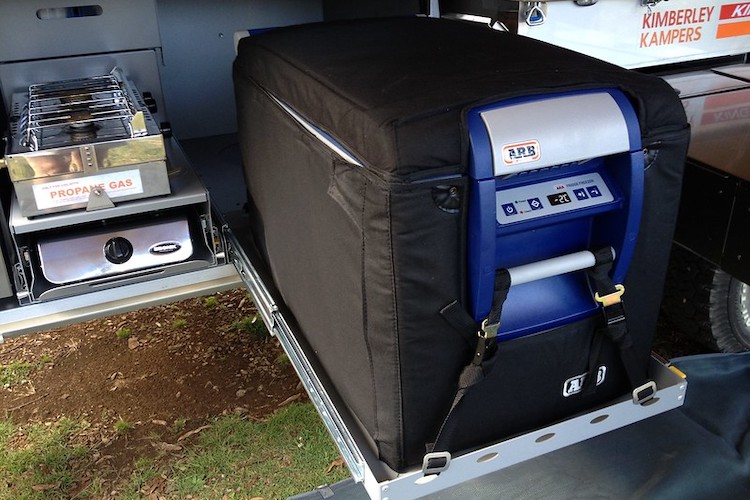
Yep, you can use a mini fridge for camping. While most camping trips last a couple of nights, having a fridge on extended trips is helpful.
I use a mini fridge with freezer in our tent full time without issue
Carl B
Mini fridges in some ways are more convenient than regular ice coolers since you don’t need to constantly buy ice. You also don’t have to worry about the ice melting and making your food all soggy. Another advantage mini-fridges have over coolers is that they sometimes have more room because ice isn’t taking up space.
Depending on how cold your fridge can get, it might not be the best in super hot weather. Fridges also take time to get cold. But if your fridge works perfectly fine, it could be a good choice. It’s best to test your fridge ahead of time and see how cold it can get.
Can You Put a Mini Fridge in a Tent?
You can put a mini-fridge in a tent, but it might not be the best idea. One, fridges produce heat. If you’re camping in hot weather, you don’t want to be adding an additional heat source inside your tent. Even if you have an air conditioner in your tent, the AC will have to work even harder.
The second reason why having a mini fridge in your tent might not be a smart choice is because of animals. If you are at a well-established campsite where there aren’t many animals, this might be okay. If you are in bear country though, you don’t want to be storing any food in your tent. I personally like to keep all my food inside my car.
And lastly, if your fridge makes any humming noises, it could be harder to get a nice night’s sleep. A lot of fridges are fairly silent though so this may not be an issue at all.
You may also like Best Reclining Camping Chairs
How to Power Your Mini Fridge
There are some drawbacks though to taking a fridge camping. The biggest drawback, of course, is that fridges require electricity.
If you have a normal tent site, you probably won’t have electric hookups. And if you are able to get access to one, you might not be able to just connect your fridge to it without some kind of adapter. In this case, you may have to consider other ways to keep your food cold while camping.
However, there are some campgrounds that do offer hookups for tent campers. KOA is one campground that offers “Premium Tent Sites with large, well-defined and comfy areas for your tent, along with ample parking and your own electric hookups for easy recharging”.
It’s not a bad idea to call your campground ahead of time and ask them if a fridge hookup is possible. They might even tell you which sites to research ahead of time.
If you have an RV, bringing a mini cooler should be a lot easier. However, if you don’t, you’ll need to use a battery or generator.
The Best Ways to Power a Camping Fridge
The best way to power your camping fridge is to get a generator. When most people think of generators, they think of these big heavy loud machines they have to haul around… but that’s not the case with camping generators. There are some lightweight, quiet, and affordable camping generators that can easily power full-size fridges. They are definitely worth checking out.
Of course, generators require gas. Camping generators will need to be refilled from time to time, so expect to bring some extra fuel. If this isn’t a good option, there are also camping batteries that can work. These have pros and cons and are also worth considering.
Camping batteries are also another fine choice for powering your mini fridge. These will come in different range capacities. Usually the more powerful the battery, the more expensive it will be. These types of batteries can power a mini fridge for a full day and recharge on solar. If your battery gets low, you can also recharge it with your car.
You may also like Best Tent Air Conditioners
Tips for Camping With Your Fridge
Here are a few tips for making the most when bringing your mini fridge camping:
- Keep your fridge in a cool spot, preferably in the shade. You can even use a tarp to keep the sun off.
- Only open the fridge when you need to. Constantly opening the fridge will make the fridge work harder and use more power. This is why it’s best to store drinks in a different cooler.
- Pay attention to the weather. Electronics and rain don’t mix well.
- Be sure to thaw your fridge before you leave. Otherwise, your fridge may leak in your car on the way home.
- Keep extension cords out of the way so they don’t become a tripping hazard, especially at night.
How Mini Fridges Actually Run Off Camp Power
A home mini-fridge runs on 110V AC. Most campgrounds have 30-amp AC hookups, so in a powered site you can just plug in and go. Off-grid, it’s more complicated. The four real power paths for a mini fridge at camp:
- Campground shore power (110V). Plug straight into the site’s outlet. No conversion needed. Uses 60–90 kWh per month for a typical 3.2 cu ft fridge.
- 12V DC camping fridge (Dometic, Alpicool, Iceco). Purpose-built for off-grid use. Runs straight off a car battery, a portable power station, or a solar panel. Consumes 2–6 amp-hours per hour, depending on temperature.
- AC mini fridge on an inverter. Plug a home mini fridge into a 110V inverter wired to a deep-cycle battery. Works but wastes about 15% of the energy to inverter heat.
- Portable power station (Jackery, EcoFlow, Bluetti). The most convenient off-grid option. A 1000 Wh station runs a small mini fridge for ~10–15 hours; pair it with a solar panel to recharge during the day.
Mini Fridge vs Cooler vs 12V Camping Fridge
A quick honest comparison:
- Cooler with ice: cheapest, zero power, ice melts within 2–5 days. Works for weekend trips.
- Home mini fridge at powered site: cold forever as long as you’re plugged in. Big and heavy; awkward to transport.
- 12V camping fridge: purpose-built, well-insulated, runs off a car battery. The right answer for 4+ day off-grid trips. Pricier ($250–$900).
- Thermoelectric “cooler-fridge” (Igloo Iceless, Coleman PowerChill): cheap 12V option. Only cools 40°F below ambient, so on a hot day it won’t get truly cold. Better than nothing.
When a Mini Fridge Is the Right Call
- Long car-camping trips at powered sites. 5+ nights, meat and dairy in the menu, beers cold every evening.
- Van life / RV setups. Dedicated camper electrical systems handle a small fridge easily.
- Hunting or fishing camps with a generator. Extended stays where a steady power source is already set up.
- Festival camping. Multi-day festival sites often have power hookups; a mini fridge keeps a week’s food safe.
When a Cooler Wins
- Weekend trips (1–3 nights). A block of ice handles the full trip. Not worth the power overhead.
- No shore power. You’d need a power station or dual battery setup, which costs more than a high-end cooler like a Yeti or RTIC.
- Backpacking. Obviously. No power, no weight capacity.
- Short trips with a teen-plus group. Simpler logistics; one cooler per group is easier than negotiating fridge space.
Packing a Mini Fridge for a Camping Trip
A few realities from experience:
- Pre-chill at home. Run the fridge for 24 hours before leaving. Loading a warm fridge with warm food triples the energy draw on day one.
- Pack tightly. A full fridge holds temperature better than an empty one. Fill dead space with water bottles.
- Bring a shelf organizer. Mini fridges have one shelf max. A $15 wire rack doubles the usable space.
- Don’t open it often. Plan meals so you open the fridge 3x a day, not 12.
- Keep it out of direct sun. In the shade under a tarp or inside the vehicle, the fridge uses 30% less energy.
- Vent the back. Condenser coils need airflow — don’t push the fridge against a wall or cooler. 4 inches of clearance is the minimum.
Running a Mini Fridge from Solar
The trendy setup right now: solar panel + portable power station + 12V fridge. The math:
- A 45L 12V camping fridge uses ~400 Wh per day at 85°F ambient.
- A 100W solar panel in direct sun generates ~400–500 Wh per day.
- That’s break-even on a sunny day, meaning you can run the fridge indefinitely.
- In cloudy weather, a 1000 Wh power station acts as a buffer of about 2.5 days.
The total startup cost for solar + power station + 12V fridge is $800–$1,500. That’s a lot, but for extended van life or off-grid camping, it pays off fast in beer not warming up.
Mini Fridge for Camping FAQ
Can a car battery run a mini fridge overnight?
A starter battery, no — it’ll drain to the point the car won’t start. A deep-cycle battery (100 Ah AGM or lithium), yes — it can run a 12V camping fridge for 24–48 hours.
How much power does a mini fridge use?
A standard 3.2 cu ft AC mini fridge uses about 0.25–0.35 kWh per day. A 45L 12V camping fridge uses about 0.4 kWh per day. Tiny “cube” fridges (1.0 cu ft) use about 0.15 kWh.
Can I use a mini fridge in a tent?
Technically yes if you have power, but not recommended — the compressor cycles create noise all night, and the heat exhaust fills the tent. Put the fridge under your awning or near the vehicle, not inside your sleeping area.
Do mini fridges work in cold weather?
Not well below freezing. A home mini fridge thinks the outside is cold enough and stops cycling, actually letting the inside warm up. 12V camping fridges with adjustable temperature and freezer modes handle cold weather properly.
What’s the best mini fridge for camping?
For powered sites: any 3.2 cu ft Midea or Whirlpool mini fridge runs $100–$180. For off-grid: a Dometic CFX3 45 or Iceco VL45 is the serious choice ($500–$900); an Alpicool C20 is the budget option at $180.